
The Witcher: Sirens of the Deep
Verdict
Sirens of the Deep is doing two different things at the same time, surprisingly, pretty well: a surface romance about loving across incompatible worlds and underneath that a political allegory where the whole species conflict gets fueled by resource exploitation and greed. The pearl-diving subplot is my favourite idea and I wish it would have been the more prevalent story line. The animation commits where it counts, some of these fight scenes are very well animated and thus justify the format choice. Where it loses points is the dialogue animation which flattens whenever the action drops away, and a score that I honestly can't remember being there at all. It's a solid film with some pretty cool ideas that doesn't quite stick the landing on everything it reaches for.
What should you know before starting?Watch it after the live-action Seasons 1 to 3.
Pros
- romance across incompatible worlds with a political story underneath
- fight scenes that justify the animated format
Cons
- dialogue animation goes flat whenever the action stops
- a score you won't remember
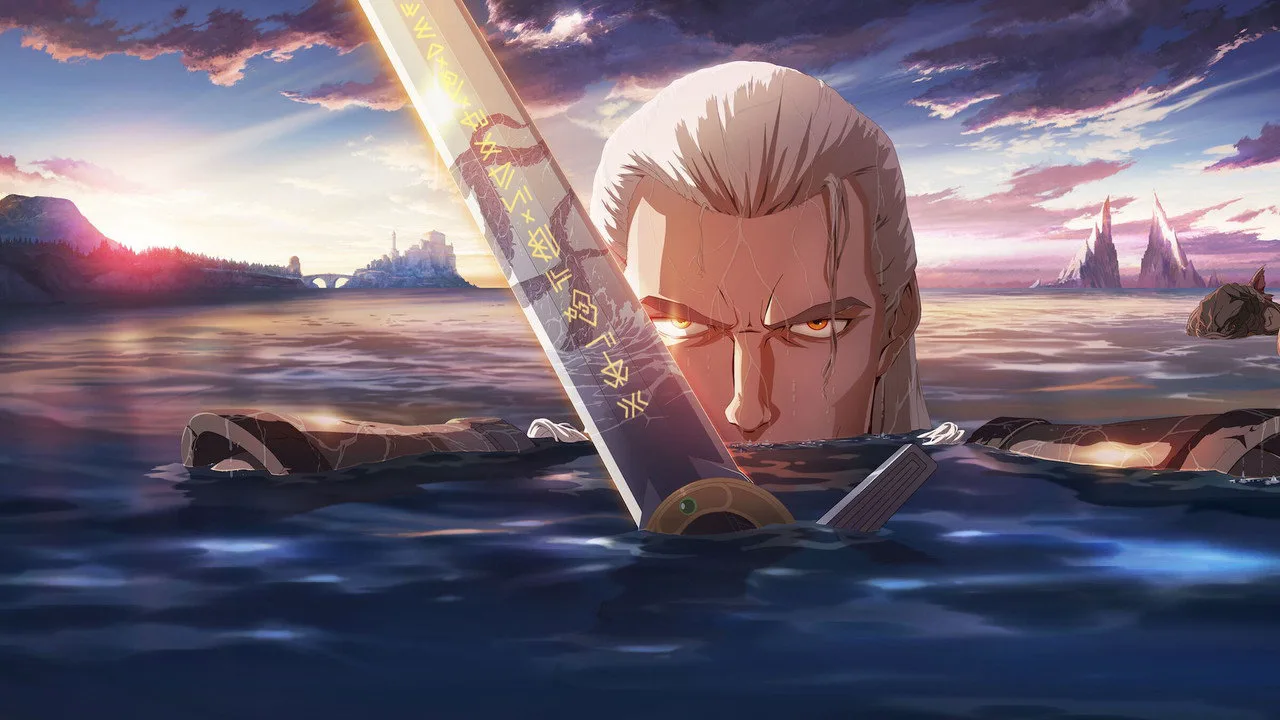
trivia: the pearl divers are in the story too.
In Andrzej Sapkowski’s short story “A Little Sacrifice”, Geralt investigates the deaths of local divers after his translating job fails, and that leads him to the people of the sea. The film makes pearls the pressure point: the discovery of pearls in the waters pushes more humans to test the recent treaty with the merpeople. Its opening hunt targets a sea monster blamed for killing divers, until the merpeople step in and say it only feeds on oysters. Grimdark Magazine’s review reads the humans as pearl-seekers who throw away oysters while their village goes hungry.
behind the scenes: the story has no battle.
In “A Little Sacrifice”, from the collection Sword of Destiny, the clash between humans and the sea people is stopped before it starts, and Geralt is mostly there to translate. The film turns that into a full battle with extra monster fights, and gives both lovers families with their own opinions, which is how a short story fills a feature. Doug Cockle read the story twice and says the film keeps its spirit, and that an anime has to tell the story visually.
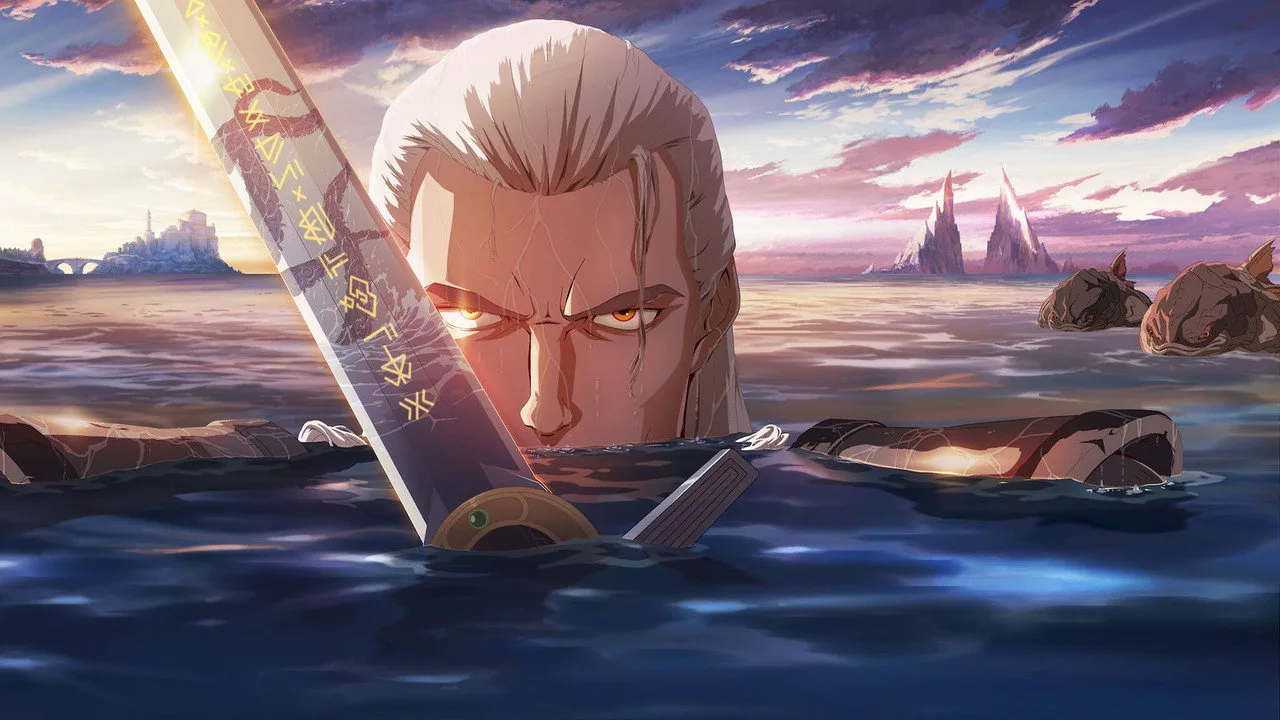
behind the scenes: the game’s Geralt in a Netflix film.
Doug Cockle, who has voiced Geralt in the video games since the first one in 2007, recorded his part alone, as is usual for anime, so he never performed opposite Joey Batey, the voice of Jaskier. It was his first time recording Geralt to finished animation, which let him act his grunts and hits to the picture instead of recording them separately like in the games. The hardest part was Merspeak: the words were easy, but he had to give them the merpeople’s sing-song rhythm, for a Geralt who “is not very musical”.
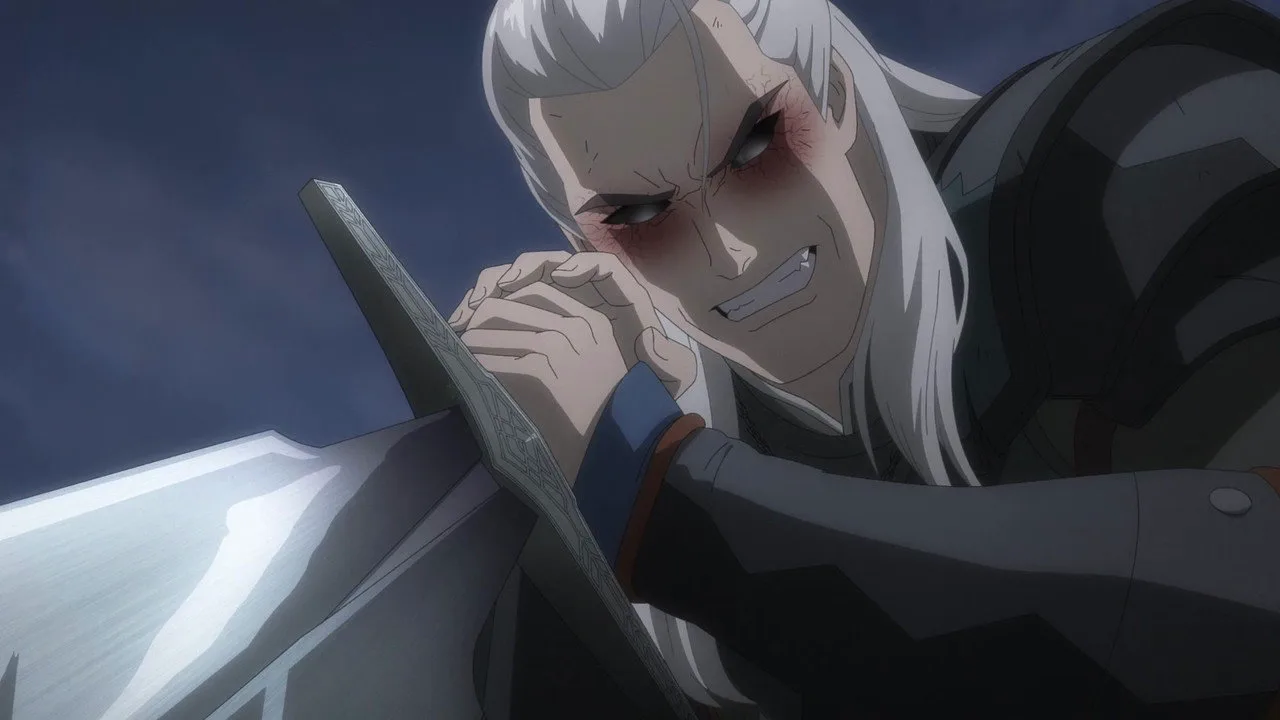
behind the scenes: monsters who can fall in love.
The merpeople were designed to look monstrous instead of pretty, a mix of fish and alien traits with human features, picked from dozens of concepts. They still needed expressive faces, because the film asks you to believe a king’s son and a mermaid fall in love, so the team spent months on skin texture, eye shape and fin placement. The underwater kingdom was built from scratch, and water flow, refracting light and particles were the hardest parts to animate.
trivia: the film has songs.
Joseph Trapanese, who scored seasons 2 and 3 of the live-action series, wrote the score. The 27-track album came out on 11 February 2025 with three original songs he co-wrote: “My Story” (sung by Christina Wren and Joey Batey), “The Price of Love” (Mallory Jansen) and “A Little Sacrifice” (Batey). Wren voices Essi and Jansen voices the sea witch Melusina. Track titles include “Geralt Enters the Chat” and “Calamari”.
Images: Studio Mir / Netflix (stills via TMDB).