
The Odyssey
Verdict
Nolan did an awesome job. Movies that switch between multiple plot lines on the fly usually break down if the transitions don't get enough thought from the director, here he rotates two axes at once - between characters and between time - and nails it. Cinematography and the two leads are my favourite things across the movie, the cgi never looked out of place and for an amateur like me it felt pretty faithful to the myths. If I had to write one criticism, it's about Telemachus plot line: I feel like they could've done more with Tom Holland in the role here but his resolution didn't feel as important as I thought it would've been for the overall story - then again Odysseus is the major focus of the movie.
Pros
- the cross-cutting between characters and time
- the two leads
- the cinematography
- CGI that fits the world
- the score's drums
Cons
- Telemachus' plot line lacks weight
- a rushed setup for Telemachus' journey
then and now.
The Odyssey jumps between Odysseus and his son Telemachus as well as between Odysseus in the present and his past, from the Trojan War to every stop of his voyage. Once the voyage gets going, the movie settles into a rhythm of Odysseus telling the story of his adventures and what he went through with his crew. The pacing in those voyage scenes is very good. Things that could have been illogical get cleared up by the characters themselves, sometimes only two scenes after I started questioning them. With that many strands running at once, it still held my attention until the end.
the community: scenes that end too early.
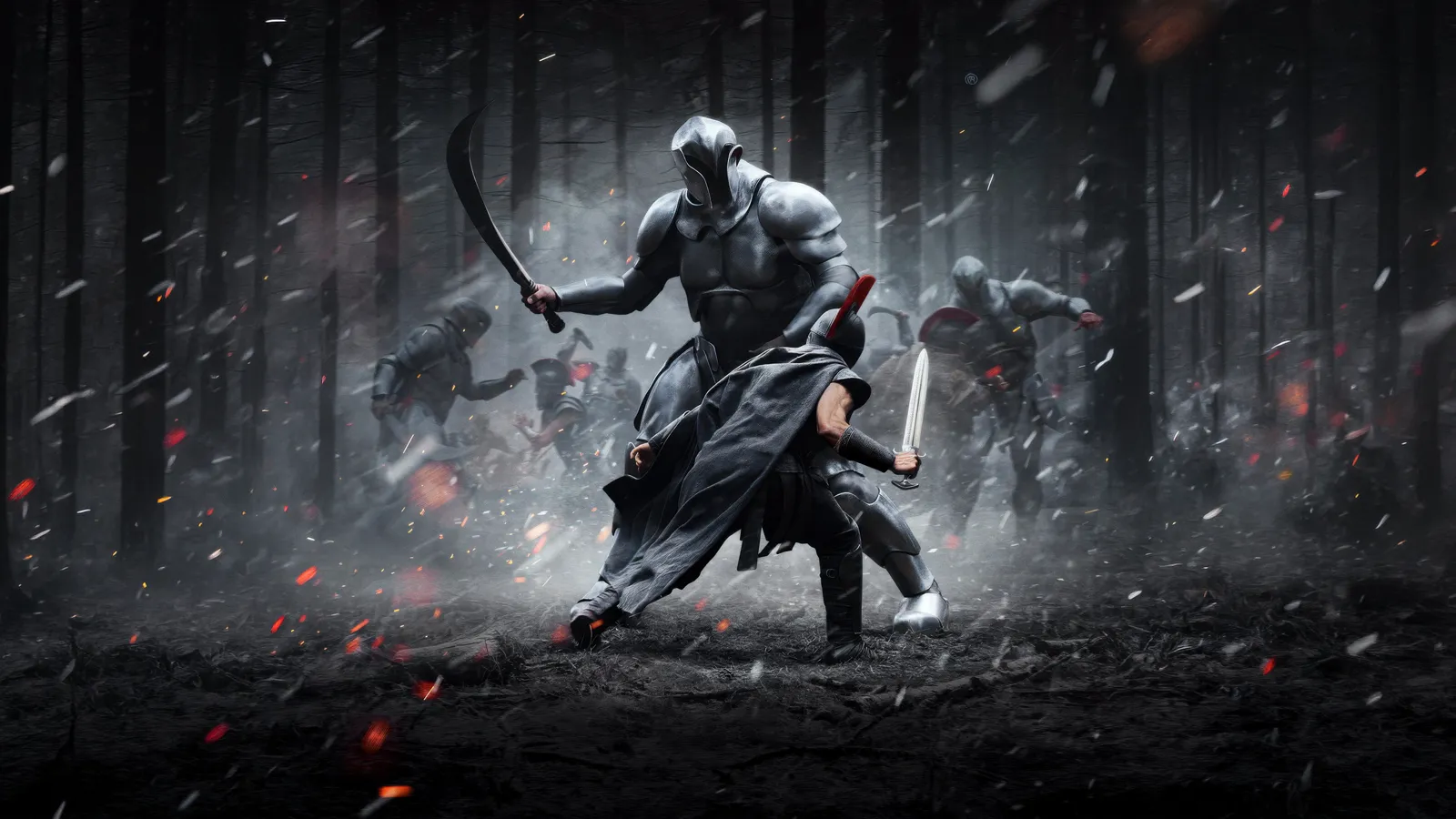
Several viewers on r/TrueFilm say the movie cuts away the moment a scene has delivered its information. One poster points to Telemachus meeting Menelaus, played by Jon Bernthal: he sits down and the scene cuts before the meeting ever gets time to land. Some guess that the short film reels of the IMAX cameras forced the hard cuts, but nobody in the thread backs that up. A smaller group defends it as deliberate and says the pace mirrors Odysseus racing home through broken memories. Even fans of the movie mostly say they would take ten more minutes spread across it.
the first monster.
For the first hour or so I didn’t really know what to expect from this movie. It pulls you into its world fast, along with its characters, their goals and the frictions between them. Then came the first scene that leans heavily on CGI, with the first monster appearing. That Cyclops scene gave me whiplash: that was the point I knew I’d be in for a crazy movie. The CGI never felt out of place and nothing in the world looked weird. On top of that, the Cyclops’ screams made the scene even more intense.
behind the scenes: most of the “cgi” is physical.
Director Christopher Nolan told Empire he wanted to bring back the kind of fantasy adventure Ray Harryhausen used to make, at the quality of a prestige film. A lot of what looks like CGI was built for real. The Cyclops is a mix of a puppet on set, a costume with the actor Bill Irwin inside it, and digital work on top. For a whirlpool at sea, the effect was laid over real rings of water that jetski riders churned up off Sicily. Big size differences between characters came from stunt performers of very different heights and forced-perspective camera tricks instead of digital shrinking. All of it was shot on 70mm IMAX film.
odysseus and telemachus.
The acting is convincing, especially from the two leads, Matt Damon (Odysseus) and Tom Holland (Telemachus). The pacing only felt a little unnatural when Telemachus sets out on his own journey to find out more about his father. The setup had to go fast so his plot line wouldn’t hold up the rest, but it’s a bit unrealistic that the queen’s son could sneak out on a ship with a decently sized crew without anyone noticing or trying to stop him. Next to Odysseus’ arc, his whole strand ends up feeling less impactful than I expected.
behind the scenes: why everyone sounds american.
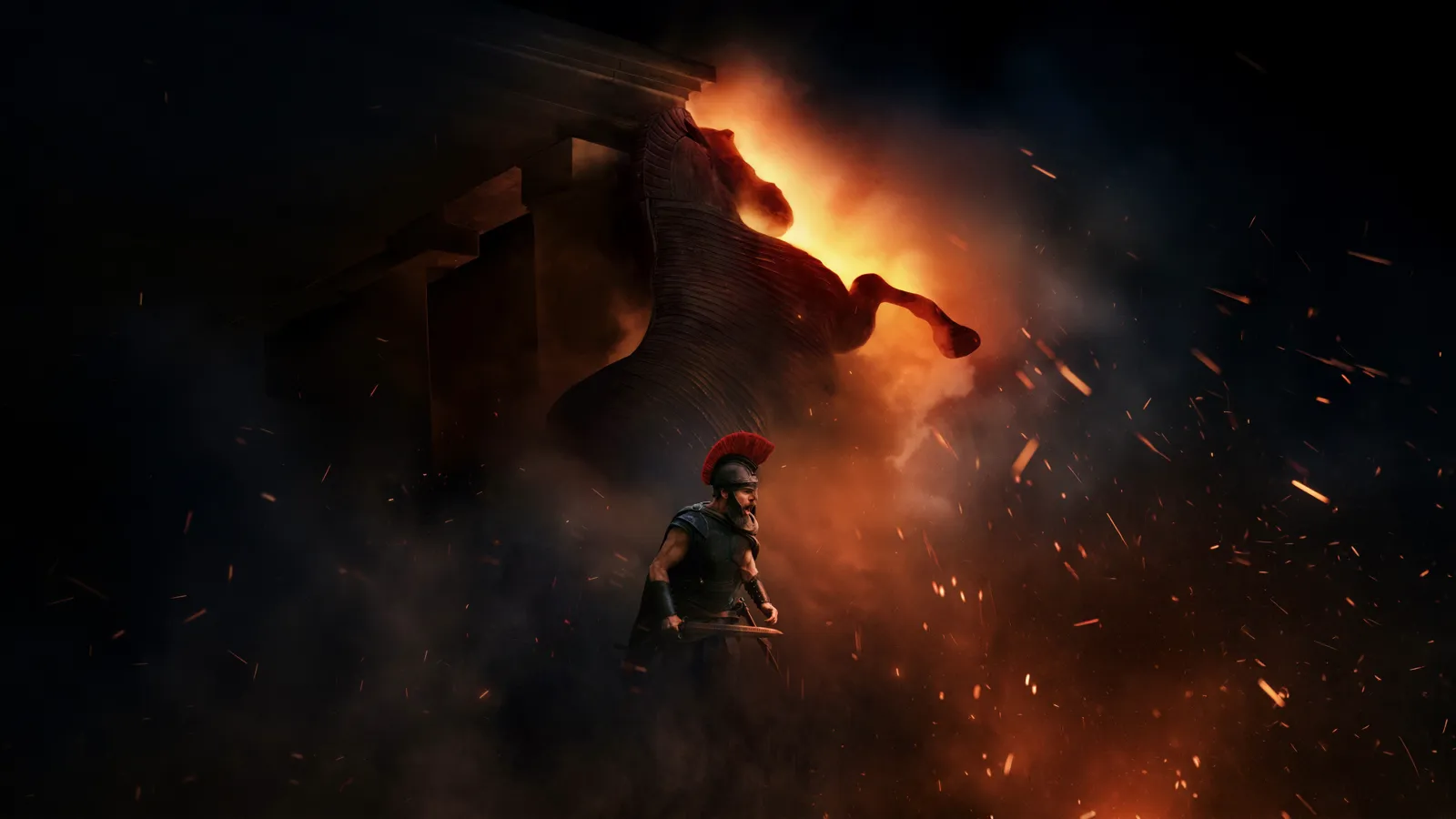
While making the movie, Nolan screened Andrei Rublev, Ran and The Last Temptation of Christ for cast and crew. Martin Scorsese’s film skips the stiff, British-sounding way ancient characters usually talk on screen. That is said to be where the American accents and the plain, modern dialogue come from. Holland has pointed out that the British version isn’t historically accurate either. It’s also why Telemachus calls his father “dad”. The trailer’s “daddy” line was one of the things people attacked online before the release.
the look and the sound.
Next to the two leads, the cinematography is my favourite thing about the movie.
behind the scenes: a camera too loud to talk next to.
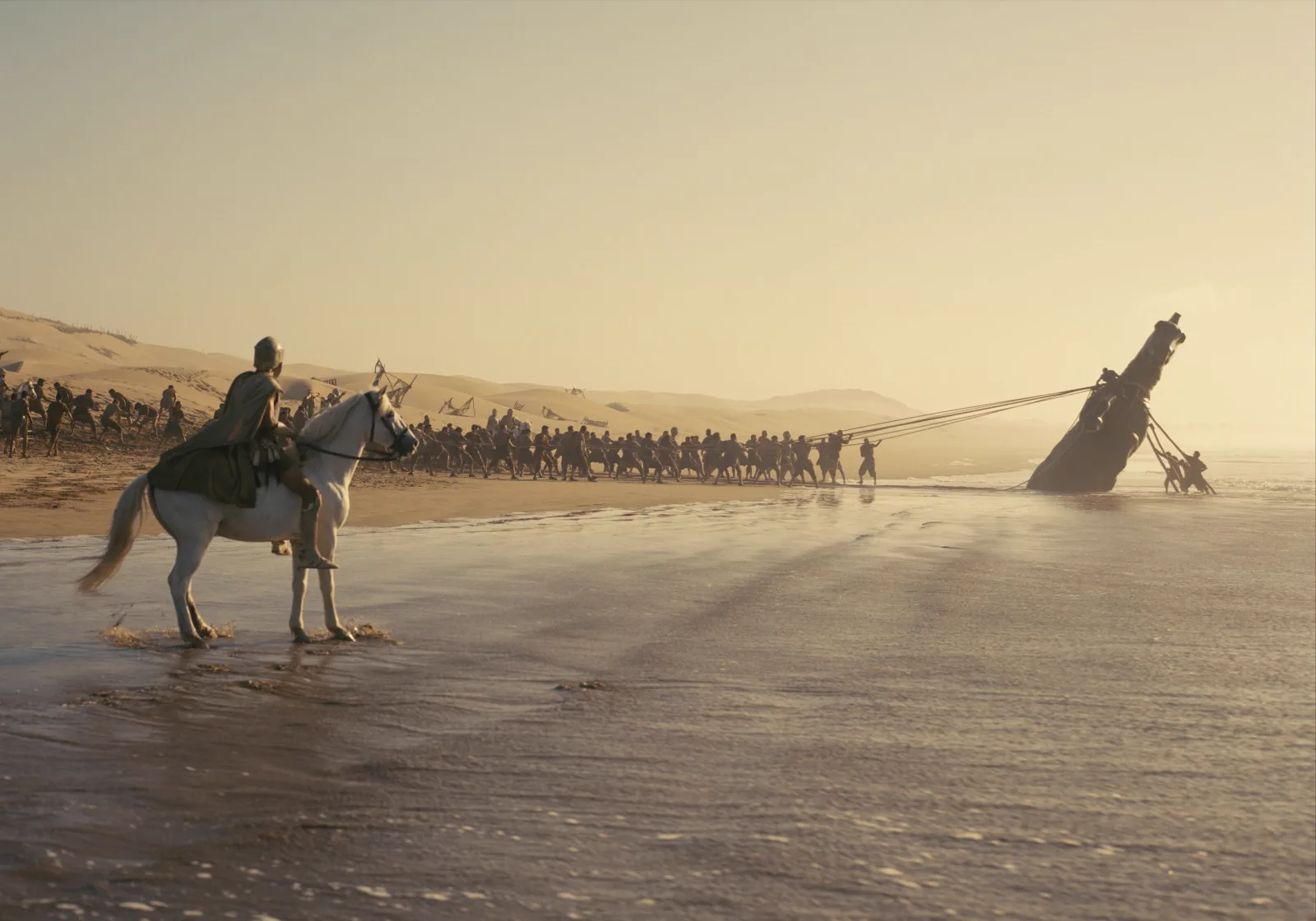
The whole movie was shot on IMAX film cameras. They are huge and so loud that a custom sound-dampening rig was reportedly built around them, with mirrors so the actors could still see each other. A reel in those cameras holds only about three minutes of film before it has to be changed.
The OST fits the story: big drums in high-stakes moments get faster and faster, often over several minutes. They instantly make those scenes more tense. Outside of the music, the sound design has some standout moments like a songthe Sirens’ song. It never felt too loud unless it wanted to be.
the myths.
Nolan tries to balance the appeal to a mainstream audience with a few more subtle plot devices, like the way Athena is personified. I’m not an expert, but for an amateur like me the movie felt pretty faithful to the myths.
the community: the “nobody” joke is gone.
Fans of Homer’s poem were annoyed that the movie drops the “Nobody” wordplay, where Odysseus tells the Cyclops his name is Nobody. Nolan reportedly cut it because the pun doesn’t work in English. Plenty of Homer fans weren’t convinced. A lot more is left out as well: the island of the Lotus-Eaters (the lotus flowers move to Calypso), the Phaeacians and the princess Nausicaa, the god Hermes, and the test with the bed carved from an olive tree. Critics are split on whether that makes Odysseus a more serious character than the one in the poem.
after the voyage, with spoilers.
Spoilers: click to reveal
At Circe’s home I wondered why she wouldn’t turn her sister back if she has the power to do so. Two scenes later Odysseus asks her exactly that.
trivia: circe’s sister.
The raven in Circe’s hut is her sister, a character the movie invented: in the myths no sister of Circe is ever turned into a bird. Odysseus works out the pattern on his own. The deer he shoots turns back into a man, so the caged and leashed animals must be people too. He threatens to break the raven’s neck. Circe admits who it is. Asked why she keeps her sister as a bird, she only says they get along better that way. In exchange for the raven’s life she turns his men back and keeps her word.
fan theory: is athena real?
Athena only ever appears to Odysseus when he is alone. A late flashback shows a Trojan priestess, played by the same actress, Zendaya (Athena), being killed in front of him, so Athena could be his guilt wearing that face or the goddess taking her form. The one physical clue is the shroud she leaves behind. He wears it as a hood and other characters touch it. Telemachus suspects his teacher Mentor is Athena in disguise, as in the poem, but here Mentor dies. Athena also tells Odysseus that the gods are the weather and the seasons. From now on, she says, humans are on their own.
the community: a loud cave and a missing trick.
On r/TrueFilm one viewer calls the cave the best use of sound in Nolan’s career, so strange and loud that they stopped analysing it and just sat in it. Another says hearing bones crunch between the Cyclops’ teeth in IMAX told them everything about the movie’s violence. Readers of the poem miss the trick with the wine: instead of outwitting the Cyclops, Odysseus blinds him with an arrow fired from the ship. One commenter calls that unmotivated because it makes the Cyclops look stupid. Another says that without the cunning, Odysseus later asking to be tied to the mast feels out of character.
Images: Syncopy / Universal Pictures (stills via TMDB and WSJ).